

The Left Party (Die Linke) received the most votes in Sunday’s elections for the Berlin state parliament, collecting 25.7 percent of the votes, followed by the Christian Democratic Union (CDU) with 18.8 percent, the Alternative for Germany (AfD) with 16.3 percent, the Greens at 14.3 percent, and the Social Democrats (SPD) at 12.1.
Voter turnout was high with more than 75 percent of eligible voters casting a ballot.
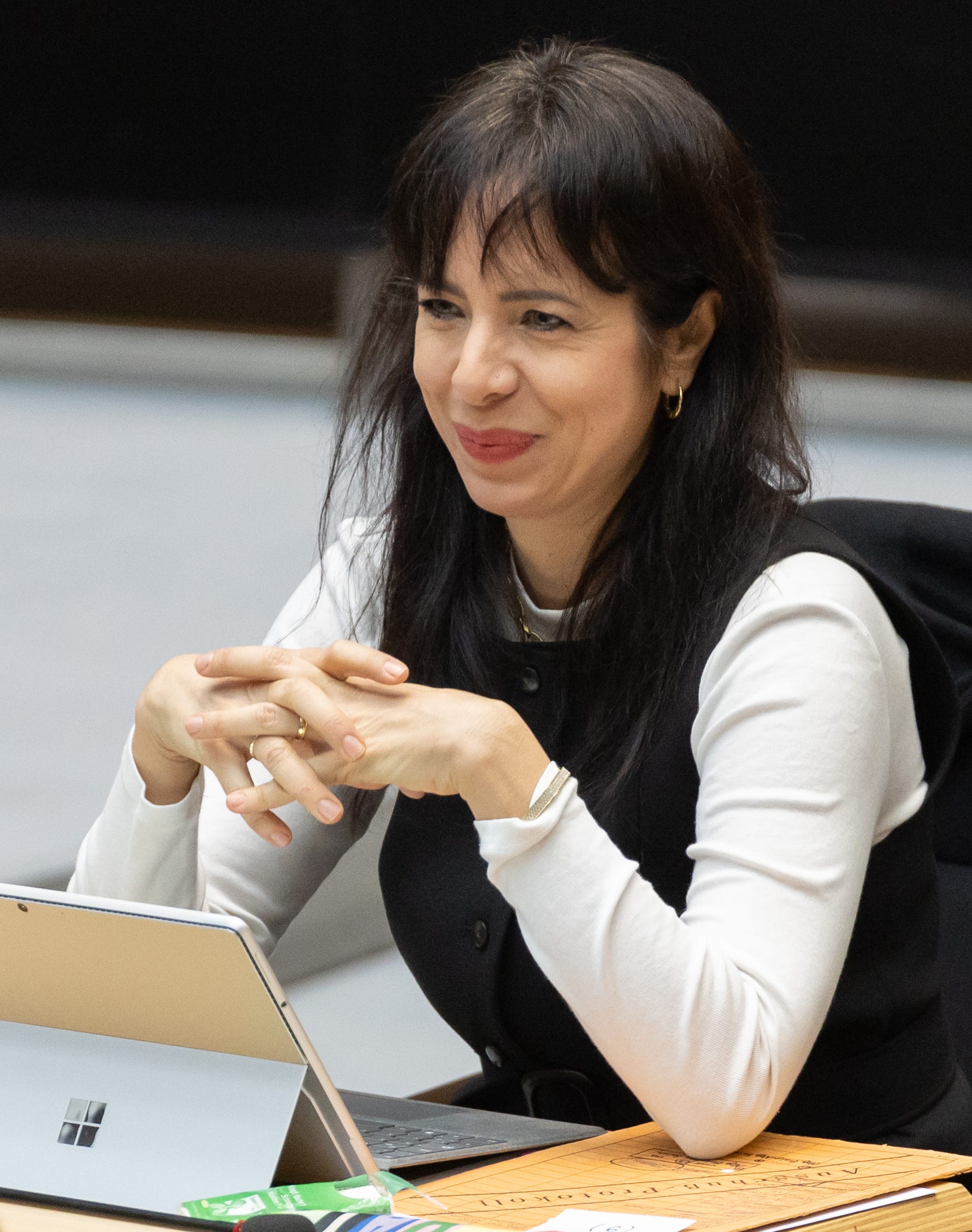
This means that Die Linke’s designated lead candidate, Elif Eralp, will likely be the new mayor. She will be the city’s first governing mayor of Turkish descent and the first from the Left.
(She has also represented our district in Friedrichshain-Kreuzberg in the parliament since 2021.)
All of the rest of the parties — there were a total of 17 on the ballot— failed to clear the 5 percent threshold to be represented.
The seats in the state parliament (official name: Abgeordnetenhaus) are allocated proportionally based on the percentage of the vote each party received.
As with the national elections, it is rare for any one party to get more than 50 percent of the vote and be able to establish a government on their own.
Coalition governments are the norm, with the leading parties working out binding agreements on how they will govern and who will hold what office in the Berlin Senat, which is the state’s executive branch.
As I’m writing this, it is expected that Die Linke will be able to rather easily put together a coalition with the Greens and the center-left SPD to get to the needed majority of representatives (at least 80) to govern.
(The Zeit has put together several graphs showing the potential governing coalitions and how the seats in parliament have been allocated.)
Die Linke ran on a campaign of addressing Berlin’s housing shortage and skyrocketing rents, pledging to honor the results of the 2021 public referendum calling for expropriation of housing units owned by the largest private real estate companies.
They have also pledged to encourage more housing construction, and do more to include Berlin’s large immigrant population in the political process. More than a quarter of Berlin’s adult population are not German citizens and cannot vote.
It represents a pretty dramatic departure from the priorities of the current centre-right CDU-led government and I think makes very clearr both what voters in the city want—and how unhappy they are with the two historically mainstream parties, the center-left SPD and center-right CDU.
Personally, I usually find I most closely align with the Greens and their platform. But I am absolutely ecstatic that Die Linke has won. I look forward to seeing what this coalition can do.
For this special election edition of my weekly link roundup, I’m linking to articles with more details about Berlin’s government, how the parliamentary system works, and about the winners (and losers) from Sunday’s vote.
BERLIN.DE - Berlin’s political structure
DIE ZEIT - Alle Ergebnisse der Wahl zum Abgeordnetenhaus in Berlin
THE BERLINER - Berlin Election: Die Linke are clear winners
HEIST BERLIN: Die Linke Wins Berlin Election With 25.7% of the Vote
AL JAZEERA - Elif Eralp: A leftist leader with Turkish roots dubbed ‘Germany’s Mamdani’
WIKIPEDIA: Elif Eralp
DEUTSCHE WELLE - German elections deal a blow to Chancellor Friedrich Merz
TAZ - Das Stadtbild hat gewahlt 😉 (IYKYK)
🥙Buy Me a Kebab!
If you want to support this newsletter without a regular subscription, consider leaving a small, one-time contribution at the link below.
(This is Berlin, so it’s döner kebabs instead of coffee!)