

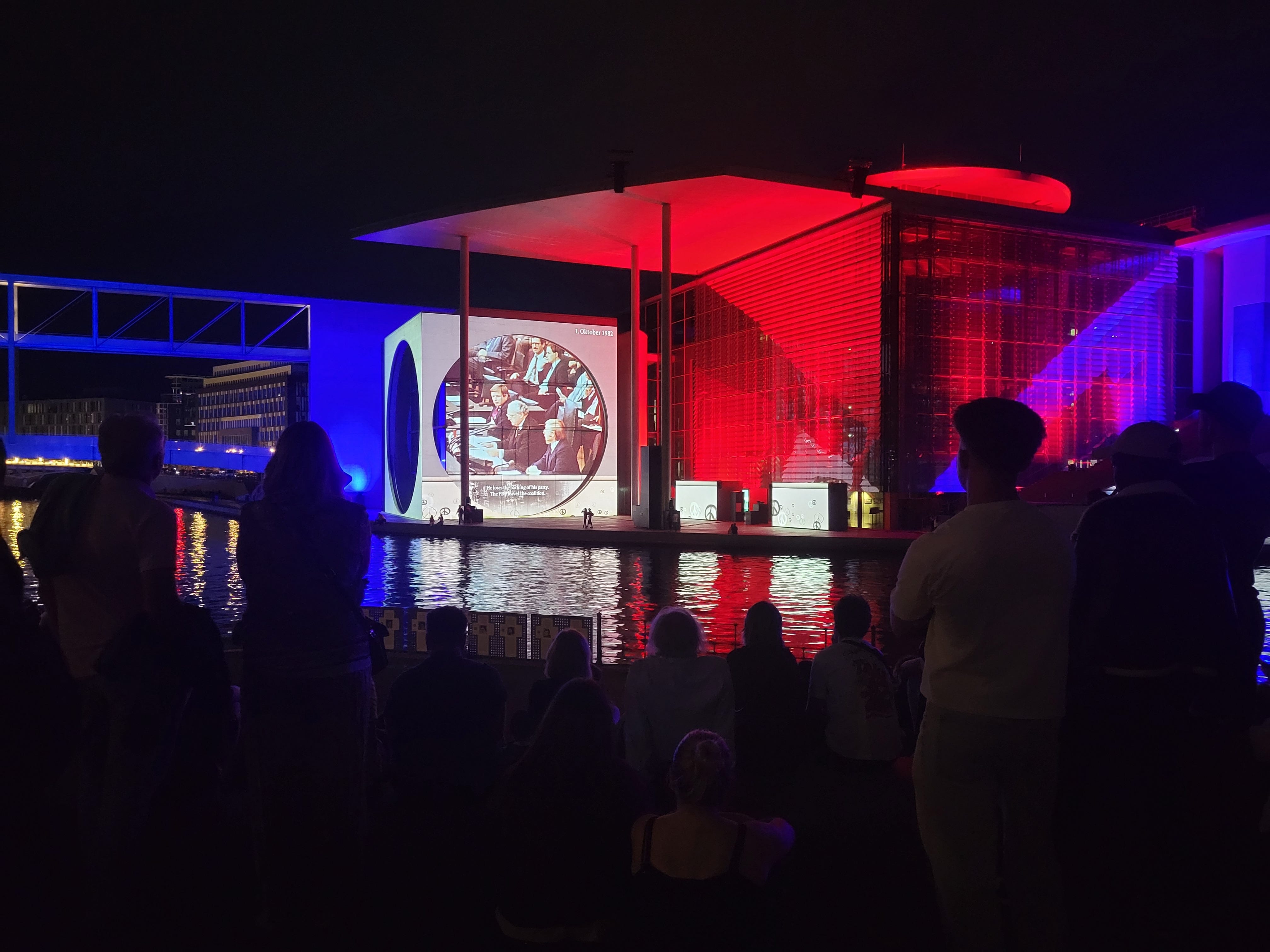
It’s election season here in Berlin and campaign posters and party volunteers knocking on doors and handing out leaflets are everywhere. Berliners who can vote will go to the polls on Sept. 20 to elect a new government.
It’s a weird feeling of nostalgia for us. The last election (actually a snap election in February 2023) took place just after we moved here and we had no clue what anything was about.
In my opinion, the CDU-led governing coalition that resulted from that election has been terrible for the city. And I am glad at least we know current governing Mayor Kai Wegner will not be returning.
Wegner announced earlier this year that he would not stand for re-election after facing pressure to resign over his mishandling of the January power outage crisis in southwest Berlin.
(Short version: While more than 45,000 residents were without power after an arsonist set fire to power cables and a substation, Wegner went to play tennis. Then, he claimed he had been coordinating relief efforts by telephone the whole time—which turned out to be untrue.)
The national news has been focused on the upcoming Sept. 8 state legislative elections in the state of Saxony-Anhalt, where the far-right Alternative for Germany (Alternative für Deutschland - AfD) party is expected to win a majority of votes for the first time and lead the state government there, potentially without the need for a governing coalition.
But in Berlin, the race is still very tight with four major parties showing roughly equal support. The Left party (Die Linke) currently has a slight lead, with current polls suggesting 20.7 percent of the vote. the imcumbent Christian Democratic Union (CDU) in second place at 18.8 percent, the AfD at 17.7 (!), and the Greens (Die Grünen) at 16.4 percent.
If you are new to Berlin, you can learn more about Berlin’s government and how the election process works at the links, below.
The WahlhYmat website, in particular, is focused on informing and including in the political process the over 1 million Berlin residents who are not citizens and are inelgible to vote.
RELATED
WahlheYmatPost: How Berlin’s Government is Formed
📕📺🎧Read, watch, listen
Some Berlin and Germany-related links that caught my eye this week:
Slow Travel Berlin: In the Shadow of the (Berlin) Wall
Thalia Gigerenzer’s profile of a Treptow family who lived for 28 years with the Berlin Wall just outside their house door. The pictures alone are worth clicking over to view, but the story is also amazing.
There aren’t that many people still living who remember both the end of the war — Mr. Neumann was 11 when it ended and an adult when the Wall went up — and a divided Germany. It is important to listen to their experiences while we can, and to not forget.
DW Fact Check: The ‘Time to Divide Germany’ campaign
A Russian influence operation known as Operation Overload (a.k.a Operation Matryoshka) has produced dozens of videos for social media that are promoting false claims that there are political leaders and celebrities supporting an effort to re-divide Germany.
The videos and a hashtag #TimetoDivideGermany appear to come from reputable news sources, but contain altered logos and edited video footage of real events. In reality, there never was a summit or a conference about dividing Germany again. And the people who are alleged to be supporting it have had their images and voices stolen and copied using artificial intelligence.
Other fake posts have posted false claims about some of the candidates in the upcoming state elections in Saxony-Anhalt, Mecklenburg-Western Pomerania, Lower Saxony, and Berlin.
More details are available in the video, below, and the DW article here.
🗺️Beyond Berlin …
Links to other writers that I definitely recommend reading. This week from Japan, Italy, and Ukraine.


🥙Buy Me a Kebab!
If you want to support this newsletter without a regular subscription, consider leaving a small, one-time contribution at the link below.
(This is Berlin, so it’s döner kebabs instead of coffee!)
Also, thank you for linking to my Kharkiv story; much appreciated!
This (the fake campaign to divide Germany) is quite amazing. Unbelievable. Sharing