


Today it’s hard for me to believe that a few weeks ago, at the end of May, I had several geraniums still ‘over-wintering’ next to the windows in my apartment, waiting for nighttime temps to be warm enough to put them back outside.
I was worried we were in for a repeat of last summer, when there were only a few isolated days it got hot enough to want to go to the lake or a swimming pool.
Who would have thought Berlin would follow up its the coldest winter in 16 years with its hottest summer weekend in, well, ever.
On Saturday and Sunday, the high temperature in Berlin reached 40C (that’s 104F) both days - with parts of central Berlin recording 41C on Sunday afternoon. That breaks the previous record high temperature of 38.9 that was set in August of 2015.
Farther east in Brandenburg, near the border with Poland, it was even hotter, with the Spree-Oder district setting Germany’s new heat record at 41.7 (107F).
The heat was so intense it warped train tracks and melted asphalt on city streets.
Personally, I have never been so glad to live in a ground-floor apartment in a newer building as I was these past few days. The windows are triple-glazed and we have metal exterior shutters on all of our them that let us black out the sun during the hot parts of the day.
I wrote on my personal blog last year about how the German-style ‘dreh-kipp fenster’ (open/kip windows) help keep our homes cool and well ventilated without air conditioning.
What we did
Most of the time we were able to cope with strict adherence to our summer strategy of Stoßlüften (impact ventilation - opening all the windows up fully) early in the morning, then closing all of the windows and shutters before the air got really hot. I also followed a tip from this great Reddit thread and put our fans next to the windows in the morning to blow air outwards.
We limited our trips outside during the heat of the day and also stored pitchers of cold water in the refrigerator and snacked on frozen fruit to help stay cool.
Still, late Sunday into Monday, I unfortunately got a practical lesson in the concept of thermal lag - the time that it takes a building that has absorbed heat to cool back down even after ambient temperatures are lower.
Saturday night, the temps dropped back down into the mid-20s, and we opened the shutters and kipped the windows overnight to let in the cooler air.
But on Sunday evening, absolutely nothing was cooling down. It was still around 30C (90F) outside at 10 p.m. and the sun was just beginning to set. It didn’t get down into the mid 20s until sometime around 2 a.m. So, despite opening the windows, it still felt like going to sleep in a sauna.
The heat wave broke Monday morning, with the temperatures back down to 26C, which is a normal high temperature for June in Berlin. The problem was, it was hotter inside our apartment than outside for at least half the day because our walls were still cooling off from all that heat.
Those thick concrete block support walls and insulation kept us toasty warm through the long chilly months, but worked against us in the heat wave.
Roasting in the attic
We had it easy, compared to many, though. People living in older buildings, particularly in the Dachgeschoss (roof level) apartments built in former unheated attics that have been converted to living space.
In many of these older buildings, inside temperatures reached over 30 degrees Celsius and couldn’t reasonably be lowered, even with the use of portable air conditioners and fans.
I know people who rented hotel rooms or stayed with friends to ride out the heat wave. Local hospitals and nursing homes were also severely affected.
The city published a map of designated cooling points, with the Berlin police deploying their massive water cannons to cool outdoor crowds rather than disperse them.
Our neighborhood WhatsApp group also shared information about local businesses with air conditioning and urged residents living on lower floors to offer assistance to those living in attics and older buildings.
According to the World Health Organization, the record temperatures were a contributing factor in more than 1,300 deaths across Europe. And, this is just the first of many such heat waves expected in the future.
Due the effects of climate change, the continent of Europe is warming at twice the global average, WHO chief Tedros Adhanom Ghebreyesus warned in a post on the social media platform, X.
“The phenomenon of the ‘once-in-a-generation’ heatwave is now occurring nearly annually,” he said.
Not as simple as ‘just get AC’
I read several articles in the international news media and on American social media that questioned Europe’s “aversion” to the use of mechanical air conditioning. (I also vented about that in another blog post.)
But it is a misconception to think that Europe in general and Germany, in particular, has some kind of cultural resistance to the use of A/C.
Europe doesn’t have air conditioning the way that the United States does for two basic reasons.
First, until very recently, it wasn’t needed—most Germans my age in Berlin say summer highs reaching even 30C (86F) were almost unheard of until a few years ago.
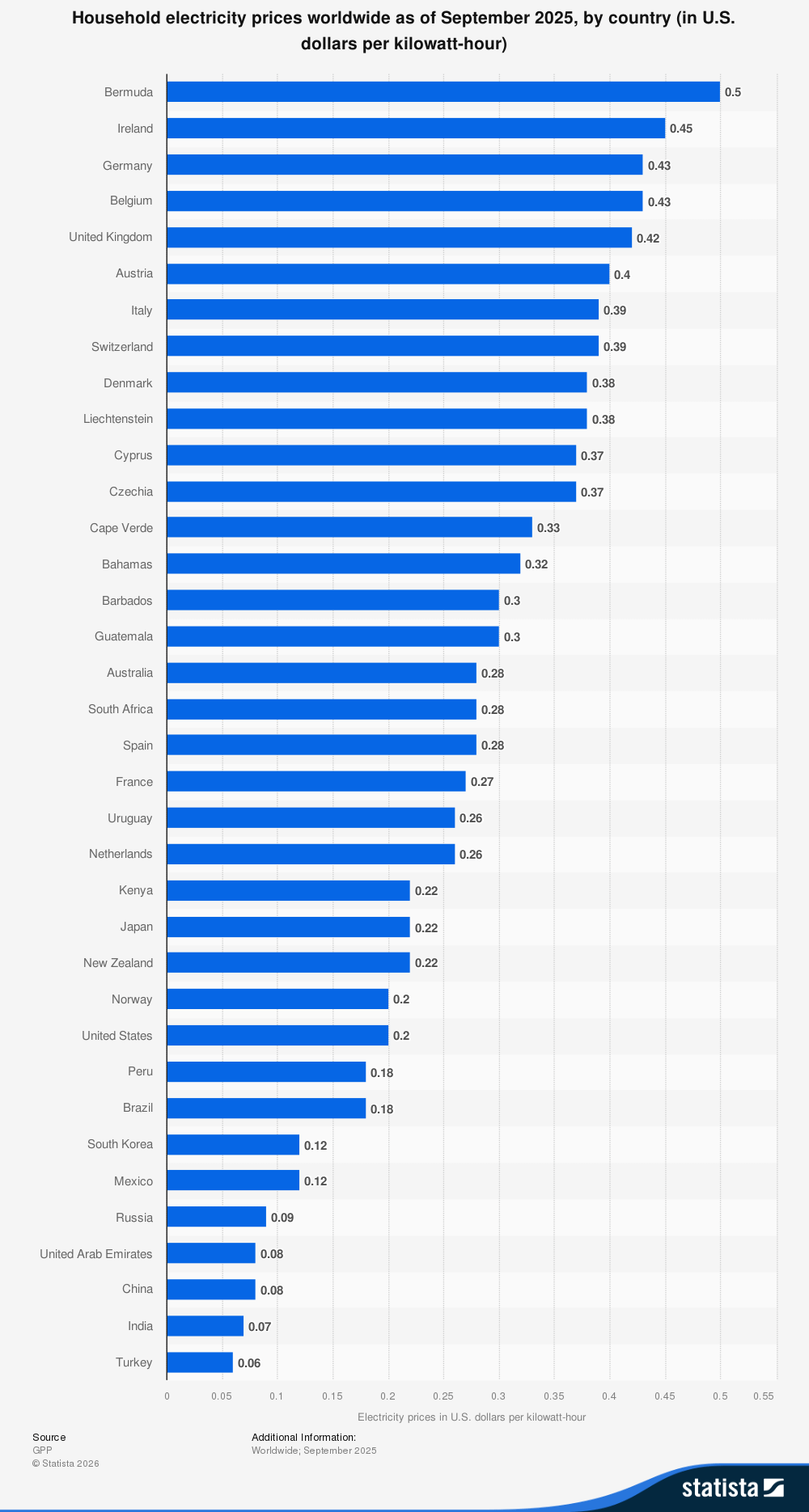
Second, air conditioning consumes a lot of electricity and electricity here is expensive.
Andrew Bossom, an English YouTuber who has lived in Germany for more than 30 years, explains it better in this video.
It makes much more sense for Germans to focus resources on efficient ways to keep themselves warm in the winter. And they haven’t been using electricity for that, either.
The government has been trying to encourage the transition to energy efficient electric heat pumps from older gas boilers and, particularly in the east, the use of coal stoves. As recently as 2021, there were still almost 6,000 homes in Berlin alone burning coal as their main heat source.
Individuals, businesses and governments in Europe simply cannot afford to also wholesale retrofit all businesses and homes with air conditioning.
Mobile air conditioners have been much more popular as the summers have gotten hotter. But, due to the expense of running them, and the difficulty in venting the hot air they generate - people who have them only use them sparingly.
Air conditioning worsens climate change
A/C for most of Europe is and will be a ‘something used to stay alive during a heat wave’ thing and not a ‘maintain a constant cool temperature indoors’ thing that many Americans are used to.
And this is important. As I wrote in my other piece, the use of air conditioning is a key driver of increased carbon dioxide emissions and global climate change.
‘Space cooling,’ mostly the use of air conditioners, but also electric fans, accounts for between 7.5 and 8 percent of global electricity use. Because most electricity is produced through the burning of fossil fuels, this means air conditioning is responsible for pumping around one billion tons of carbon dioxide into the atmosphere annually.
In addition, older and poorly maintained AC systems leak their chemical refrigerants into the air. These refrigerants contain industrial hydroflurocarbons (HFCs) which trap heat much more efficiently than carbon dioxide alone. It is estimated that HFC emissions contribute the equivalent of around 720 million tons of carbon dioxide to the atmosphere each year.
Just on an individual level, portable, freestanding air conditioning units increase local ambient temperatures because they vent heated air outside. So, you may be cooling your attic room off, but making it hotter for your neighbors lower down who couldn’t buy an air conditioner themselves.
Passive cooling + newer technologies are better
Fortunately, countries across the EU are taking a comprehensive approach to the problem, by encouraging or mandating the use of passive cooling technologies like green roofs, street-level greenspaces, and building designs that promote air circulation. At the same time, they are exploring the use of newer air conditioning technologies that are more energy efficient and less damaging to the environment.
Some examples:
Berlin is encouraging the construction and preservation of urban greenspaces to reduce the heat island effect.
Paris is pioneering the use of water from the Seine River in district cooling plants that send cold water in underground pipes to cool buildings, while complementary pipes circulate heating water away.
As rewboss mentioned above, the use of ‘reversible’ heat pumps in newer German homes can both heat and cool the interior in a way that is less damaging to the environment than traditional air conditioning units.
Even in the United States, where the use of air conditioning is much more common, access to it still far from universal. Particularly in rural areas with less stable power grids, many Americans also have a hard time keeping cool during extreme heat waves.
And as more and more competing demands for electricity are placed on aging infrastructure, more people may find themselves unable to afford the A/C systems they once took for granted.
Thoughts? Questions? Tips on surviving the next recordbreaking heatwave? Share them with me and other readers in the comments section! As always, thanks for reading!
The past week has been enjoyable, with normal summer temperatures here in Switzerland, too. But I see that the next 30+ wave is coming … so it will be a return to cave living here as well.
Tip for fan users: set a bowl of ice cubes in front of the fan. It cools the air blowing at you.
Wow-and I thought we had it rough here in the U.S. with our 94 and 95 degree(F) highs. Is the humidity high too? That means a lot.