

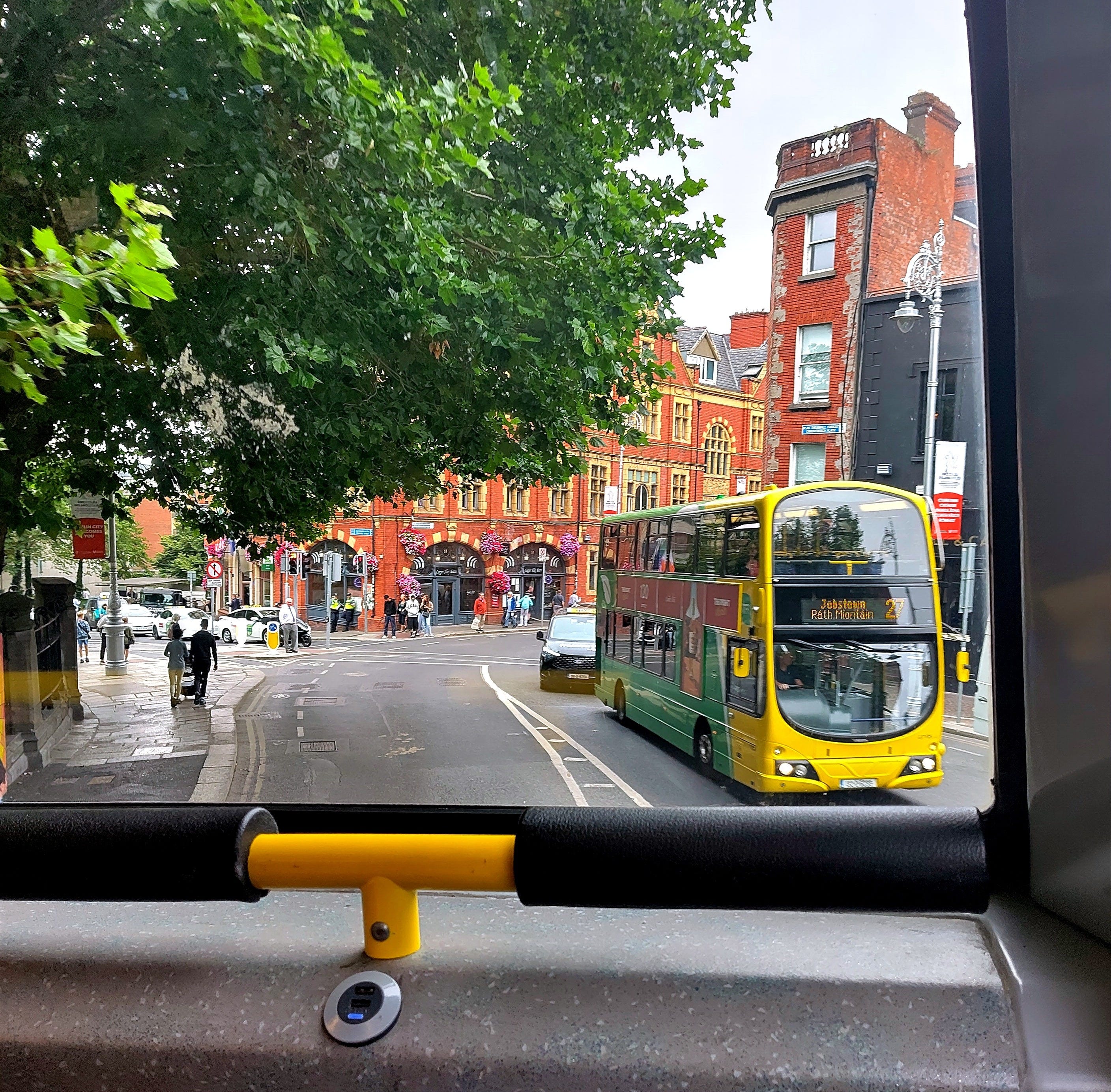
I don’t know if I had a lot of preconceived notions about what Dublin would be like before I went. If I did, they were mostly subconscious and rooted in my teenaged obsession with the music of Sinead O’Connor and U2.
So I guess I was expecting more dark and angsty, but loud.
I certainly did not envision bright sunshine and a day at the beach, and regretting the choice not to bring suncreen and swimsuits.
Our first day coincied with a local heat wave - temps in the high 70s Fahrenheit and clear, blue skys. It felt like every living being in the city - men, women, children, dogs - was headed to the shore.
Having left behind a dry-roasted Berlin with highs in the mid 90s and almost negative humidity, it felt like heaven. We took a DART train along the coast to the suburb of Howth, a port and small village on Howth’s Head, a peninsula on the north side of Dublin Bay.
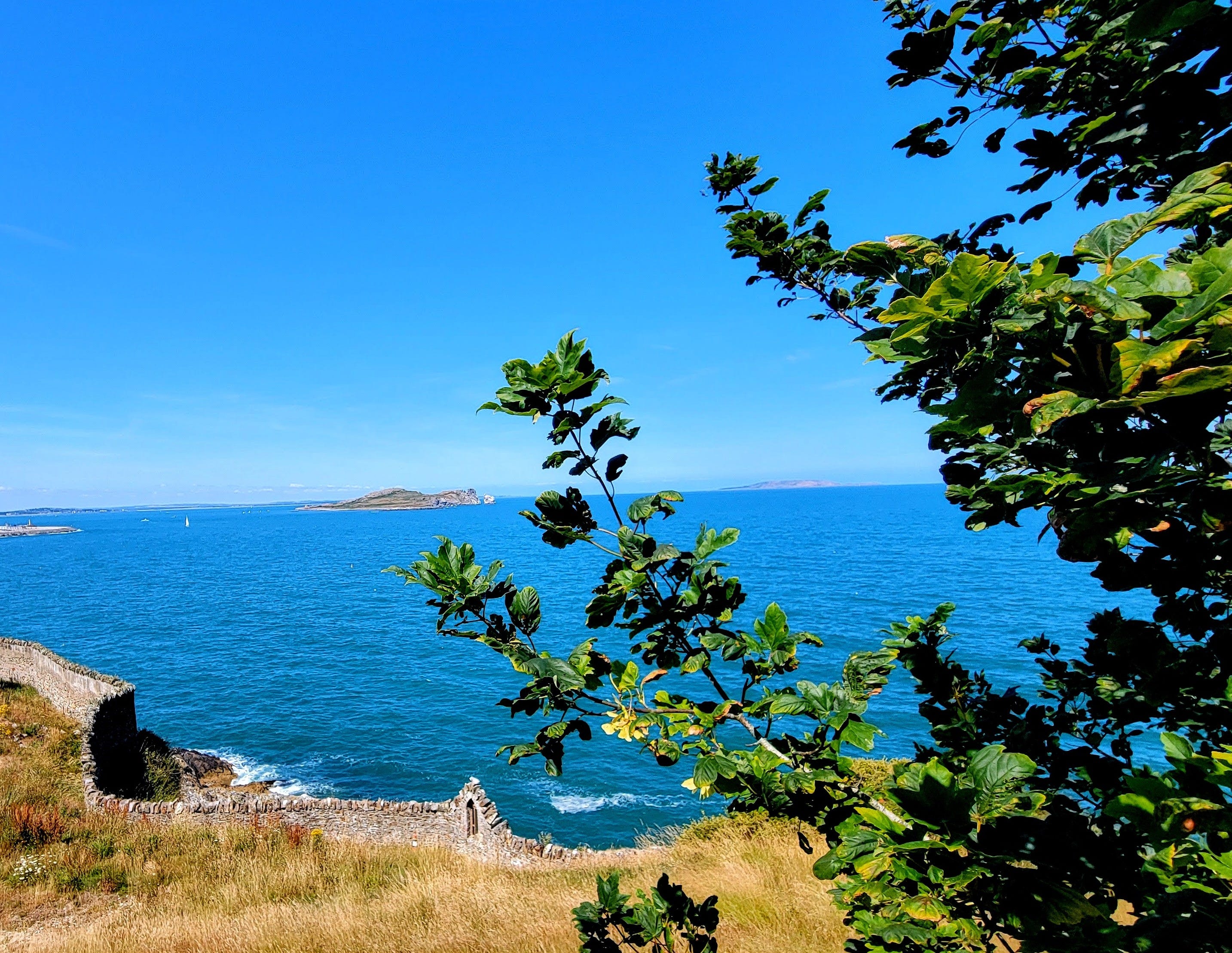
There are seveal scenic trails for hiking and taking in the views from seaside cliffs or visiting the historic Baily Lighthouse and Deer Park, the grounds of Howth Castle.
We did the Howth Summit Walk and I was surprised a couple of times along the way when people emerged suddenly along the main trail from smaller paths alongside that led down closer to the shore. The trail was so steep I didn’t see them coming up.
There’s even a small beach right off the Cliff Walk Loop, appropriately named Tiny Hidden Beach, though I don’t think I would be brave enough to hike down there.
We grabbed a delicious lunch at O’Connell’s Pub and Restaurant and saved our energy for shopping at Howth Market, with vendors selling a variety of local crafts, as well as organic produce and fresh seafood.
The basics: Getting around
Dublin is super easy to navigate by public transit—with an extensive bus and streetcar network as well as the DART commuter rail. You can buy an integrated Leap Card to pay for fares on all modes of travel, and it offers a 30 percent discount over individual fare prices.
You can also buy individual tickets at individual stations or on the buses, but you cannot use your own debit or credit cards to “tap in/tap out” the way you can in London and some other cities.
One thing to note: You have to hail the bus from the bus stop. Buses there do not automatically stop at every location. If no one is disembarking and you don’t wave at them, clearly, from the stop, the driver won’t stop. I learned this the hard way after getting skipped over the first time.
Also, we had a lot of difficulty using walking directions from Google Maps in Dublin, for some reason.
The time estimates were really off, and the live directions would tell us to make weird detours and loops through different areas. I had an sneaking suspicion that the app was deliberately routing us past businesses that advertisesd with them. But it may have been that we just didn’t empty our browser caches in our phones and they were using wonky location data.
I wrote about this in more detail here.
On the upside, bus drivers—like everyone else we encountered in Dublin—were very friendly and patient. The first time I couldn’t get the LEAP card to scan, the driver just waved me on in with, “Eh, it’s fine.” This would never happen in Berlin. the best you can hope for in the same circumstance is an eyeroll and stony silence.


Surprise hit: The Irish Rock and Roll Museum
The Irish Rock and Roll Museum is located inside The Button Factory, an event venue in the Temple Bar district, also home to Temple Lane Recording Studios.
You can only visit the museum by booking a guided tour. Our guide, Brian, was clearly a devoted fan of both music and musicians and his deep knowledge and experience really made the visit special.
My daughter is a fan of the music of U2 and the Cranberries, so we went in expecting some memorabilia and to hear some “band lore,” as she calls it. We came out adding Rory Gallagher, Gary Moore, Phil Lynott and Thin Lizzy to our playlists.


The Irish House Party
Another big hit was seeing the Irish House Party at the Lansdowne Hotel.
The show features traditional Irish music and dance performance and incorporates a lot of fun audience participation. It really did feel like a party. Plus, we learned a lot about Irish music styles and musical instruments.
For example, the uilleann pipes are known as the national bagpipe of Ireland, smaller than the more widely known Great Highland Bagpipe of Scotland. They are more suited to playing in small ensembles and gatherings.
(I later learned that both Ireland and Scotland have their own “great” pipes, sometimes called warpipes, used primarily for military functions. These are both too large and too loud to be used in a band.)
Irish traditional dance also has different styles, in addition to the step-dancing style popularized by Riverdance, there’s the Sean-nós style of solo dance with more fluid movements of the dancer’s arms and upper body.
If you are interested in folk music and other art forms, I highly recommend.
Honorable mentions
The pizza at Little Pyg. Rated the “best pizzeria in Ireland” and one of the best places to eat Neopolitan pizza in Europe, our experience did not disappoint. We ended up seated near the kitchen, and the chef sent us over a complimentary caprese salad after he saw us coveting the one on a neighboring table. FYI, it’s located behind the Pygmalion bar and nightclub in the Powerscourt Townhouse, hence the name.
Forging your own silver ring at Silver Works on Drury Street. My daughter and I loved this experience making our own unique vacation souvenirs.
Viewing the 4,000-year-old Lurgan Logboat at the National Museum of Ireland’s Archaeology Museum, and learning about life in Ireland during the Bronze Age.
Missed the mark: What not to do in Dublin
We mistakenly booked a tour for Trinity College, the Book of Kells Experience + Dublin Castle with an independent tour provider instead of booking through the college itself—which was a mistake.
First, only Trinity’s officially authoritized tour guides are allowed to work on the campus itself. When we got to the meeting location, our tour guide met us and informed us the first part of our tour would be an hour guided walk around the neighborhood near the college, which we had just walked around ourselves the previous day.
Also, Dublin Castle is closed to visitors until January 2027 because Ireland is hosting the Presidency of the European Union this year and the castle is the main venue for the attendant conferences, dinners and receptions. So, no castle visit. We got to look at the wall surrounding it outside the locked date during our “hour walk” that turned into two hours.
After two hours walking through the area around campus, she then brought us back so we could view the Book of Kells, which was the main thing we originally wanted to see.
By that time, we were tired and moving through the exhibit in Trinity’s Old Library, felt very rushed. It was also the middle of the day by that time, and the space was extremely crowded.
It was hard to feel immersed in the “immersive experience” when you are trying not to bump into other people while you wait six-people deep to get close enough to see the different items and pictures, as well as the actual book itself.
Lesson learned: Next time, we will book a tour through the college or book just the visit to the Book of Kells itself.
(I should know by now that the large, combination private tours are a bad idea, But too often I forget…)
For next time
As always, there is never enough time to see and do everything we want to do when we visit.
When we come back, I definitely want to visit The James Joyce Center, take a boat from Howth to Ireland’s Eye, and come prepared for a proper visit to Burrow Beach.
Have you been to Dublin? What are your must-see sights and experiences? Leave a comment online and share.
How did Juniper like her first pint? :)