

Winter Can be Cool
A week of snow and ice makes magic (and just a little mayhem)

Powdery snowdrifts crunched under my feet as I trudged along a busy Goethestraße in Charlottenburg last night. Soft flakes blurred my vision and collected in the folds of my coat and messenger bag. Strangely, the new surge of winter weather lightened my mood.
Earlier that afternoon, I had been struggle-stomping my way to an appointment along those same ice covered streets, trying to avoid slipping and falling, cursing the lack of enforcement of the Räumen- und Streuenpflict (clearing and ‘gritting’ obligation).
Somehow the new-fallen snow added some traction and walking became less like unexpected ice skating and more like walking on a sandy beach - if a very cold and dark sandy beach.
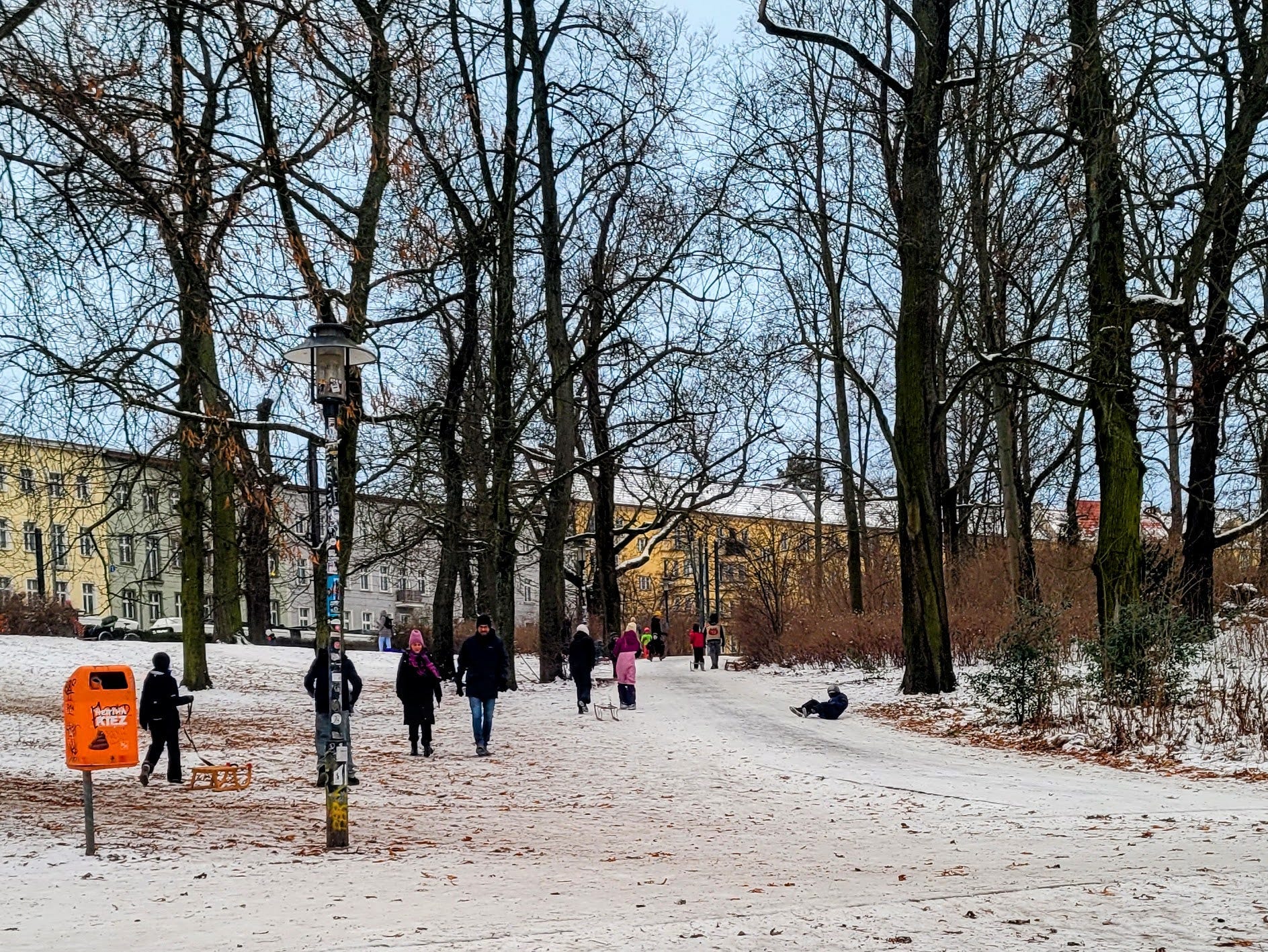
Instead of studying the ground in front of me for every step, I could look up and appreciate the scene - snowcapped roofs, bright shop windows, people pulling their young children and/or their groceries home on small wooden sleds. When Berlin gets a proper winter, it kind of transforms.
Where most years, you will hear people complain about how they want to leave for the winter or move into the sauna — when it snows, and especially when the temps stay below freezing like they have for the past two weeks —the sleds and the skates are at the ready.
The Wasserschutzpolizei has issued repeated warnings about the dangers of walking or skating on ‘wild’ ice. The agency’s website even states that the ‘ice warning service’ will never not tell you to stay off the ice.
“The water police never approve ice surfaces for public use, as they are not the competent authority for this. The respective district offices are responsible for inner-city lakes (second-order water bodies). However, they do not approve ice surfaces for public use either.”
[Translated from the German by DeepL.com, emphasis added by me.]
In short, stay off the lakes and canals! You can head to one of Berlin’s many well-managed, seasonal, outdoor skating rinks.
Berliners this week:
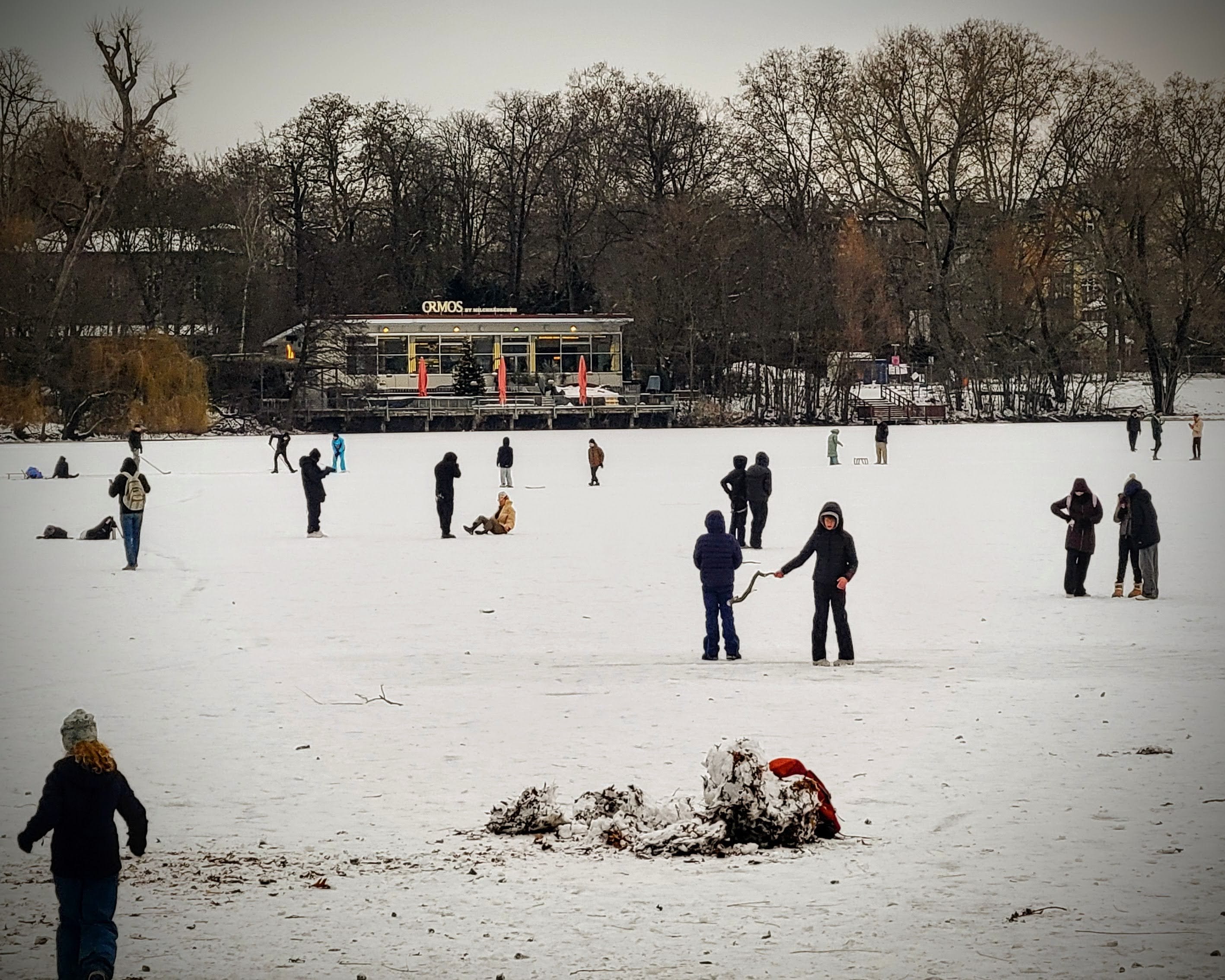
And Weißensee (which does have one of the smaller lakes in Berlin) was not an isolated case. See also:
the Müggelsee (Berlin’s largest lake),
Grunewaldsee (this is where the ‘dog beach’ normally is)
along the Landwehr Canal;
the Rummelsburg Bay (which is part of the Spree and huge - you can see the police helicopter flying over while they yell at everybody).
As someone who comes from a place where it only rarely snows and lakes and rivers never freeze, this is fascinating to observe. Wearing snow cleats or winter boots and pulling things on sleds is something that had existed only in old books or in television and movies for me.
My English settler ancestors - on both sides - arrived on Virginia shores in the 17th century and only ever migrated in one direction - south. My DNA may hail from colder climes, but subsequent generations have lost whatever once lurked in the genetic memory conveying comfort with walking on frozen water.
So, I walked around the lake path and took photos like a tourist at the Taj Mahal.
I had so many questions. Like, why are there large unfrozen sections of lake near the shore, when the deeper water in the middle was frozen? (Answer: The shore is warmer, and things like trees, logs, and man-made objects, like docks, draw warmth from the sun and make the water around them warmer.)
Why were people walking on the clear ice on the canals instead of looking for ice that is solid white? (Answer: Clear ice is actually more solid and stable than white ice, which is made up of smaller crystals and contains a lot of air bubbles.)
If you are braver than I am and want to give this a go, please read these tips and these for evaluating river or lake ice before venturing out.
The Berliner Wasserschutzpolizei’s Ice Warning and Rescue Service also offers this advice:
What should you bear in mind if you decide to go out on the ice anyway?
Never go onto the ice alone.
Never go out onto the ice in the dark or in poor visibility.
Avoid flowing waters such as the Spree, Havel, Großer Wannsee, Großer Müggelsee, and Tegeler See.
Avoid the ice under bridges.
Stay away from broken channels or ice holes.
Before stepping onto the ice, make sure you know the locations of the Berlin Fire Department’s rescue facilities on the shore.
How can you help if someone has fallen through the ice?
Get help! Call the police (110) or fire department (112).
Carefully prepare for the rescue of people who have fallen through the ice.
Check the possible rescue equipment. Otherwise, you will jeopardize success and put yourself in additional danger.
If possible, try to rescue the person from the shore, e.g. with a pole, rescue ladder, rope, or lifebuoy.
When approaching the accident site on the ice, lie down on the ice and crawl or slide. This will distribute your weight over a larger area.
This effect is supported by a ladder.
And now I leave you with the safest and warmest way to enjoy the Berlin version of a winter wonderland with this YouTube video from Urban Roamer.
Stay safe and warm everyone!
But you can skate! That is so cool. I know I wouldn't even be able to stand up in them.
Do you have any skates?